

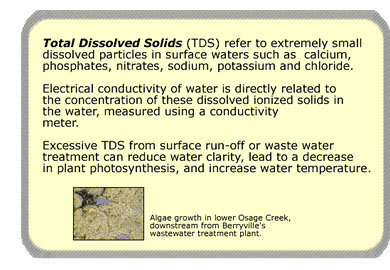
Total Dissolved Solids (TDS)
If you have ever had a family member diagnosed with a serious medical issue, you know how alarming unfamiliar terminology can sound. In the language of watershed health, Total Dissolved Solids (TDS) is a critical indicator of water quality.
TDS refers to any minerals, salts, metals, cations, or anions dissolved in water. This includes calcium, magnesium, sodium, potassium, chloride, sulfate, and bicarbonate. While some dissolved solids occur naturally from limestone and sandstone geology, elevated TDS levels are often associated with wastewater discharge, urban runoff, agricultural fertilizers, and failing septic systems.
Why High TDS Matters
High concentrations of dissolved solids can cause water to become cloudy or bitter, reduce clarity, stress aquatic life, affect the osmotic balance of fish eggs and macroinvertebrates, and increase water treatment costs for downstream municipalities.
Arkansas 303(d) Impaired Waterbodies
Portions of the Kings River and its tributaries have been evaluated under the federal Clean Water Act. The Arkansas Department of Environmental Quality (ADEQ) includes stream reaches with elevated mineral or nutrient levels on its 303(d) List of Impaired Waterbodies.
⤓ Download 2010 ADEQ 303(d) Impaired Waterbodies List (PDF)
Total Dissolved Solids (TDS) readings comparing upper vs lower river sections